When Someone You Love Chooses to Stop Eating and Drinking: Understanding VSED with Compassion
Learn about VSED (Voluntarily Stopping Eating and Drinking).
Sarah sat across from us in her living room, her hands folded in her lap, her voice steady despite the weight of what she was about to say.
“I want to stop eating and drinking,” she told us. “I know what that means. I’ve thought about this for months. And I’m ready.”
Her daughter’s face crumpled. “Mom, please. There has to be another way.”
Sarah reached for her daughter’s hand. “Sweetie, I’m 81 years old. I’ve had three strokes. I can’t walk anymore. I can barely swallow. Every day is harder than the last, and I’m just so tired.” She paused, tears finally breaking through. “I don’t want to wait until I can’t make this choice for myself. I want to leave while I still have some dignity, while I can still tell you how much I love you.”
This is VSED, Voluntarily Stopping Eating and Drinking. And if someone you love is considering VSED, or has already decided, you’re probably feeling a complicated mix of emotions: fear, confusion, maybe even anger. You might be wondering if there’s something you should do to stop them. Or you might understand their reasoning but have no idea how to support them through what’s coming.
We’re here to walk alongside you. To help you understand what VSED (Voluntarily Stopping Eating and Drinking) really is, what happens during the VSED process, and how to be present for someone making this deeply personal choice.
Understanding What VSED (Voluntarily Stopping Eating and Drinking) Means
Let’s start with what this actually is, stripped of medical jargon and assumptions.
VSED means a person who has the mental capacity to make their own decisions chooses to stop consuming all food and liquids. They’re not confused. They’re not being pressured. They understand that stopping eating and drinking will lead to their death, typically within 7 to 14 days. And they’ve decided this is how they want their life to end.
It’s important to understand what VSED is not. It’s not starvation in the way we usually think about it, someone desperate for food they can’t access. It’s not a passive giving up where someone loses interest in eating as their body shuts down naturally. It’s an active, deliberate choice made by someone who’s decided the suffering of continuing to live outweighs whatever time they might have left.
VSED is legal everywhere in the United States. It’s considered a person’s right to refuse treatment, and eating and drinking count as forms of treatment, or the refusal of them. No one can force someone to eat or drink against their will, and families who support someone’s VSED choice aren’t doing anything illegal or wrong.
We’ve sat with hundreds of families navigating this decision. And while each story is unique, there are common threads. The person choosing VSED is usually facing circumstances they find unbearable, not necessarily terminal illness, but conditions that have stripped away what makes life meaningful to them. They’re making this choice while they still can, before disease or decline takes that option away.
James had early stage dementia. He was terrified of losing himself, of not recognizing his wife of 52 years, of forgetting his daughter’s name. “I want to leave while I’m still me,” he told us. He didn’t qualify for Medical Aid in Dying because dementia alone isn’t considered terminal in the six month timeframe those laws require. But VSED gave him an option that aligned with his values, a way to exit on his own terms before the disease took his autonomy completely.

Who Makes This Choice
The people who choose VSED come from all different circumstances, but they share something essential: they’ve reached a point where continuing to live feels worse than dying.
Some have progressive neurological diseases like ALS or Parkinson’s, watching their bodies fail in ways that rob them of independence and dignity. Others have debilitating chronic pain that no amount of medication can fully touch. Some, like James, have early dementia and want to leave before they lose themselves entirely. And some simply feel they’ve lived a full life and are ready to go, even though their bodies might keep them here for months or years longer than they want.
Margaret was 93. She’d outlived her husband, her siblings, most of her friends. She could still walk, still think clearly, still live independently. But she was tired. “Everyone I love is gone,” she told her son. “I’m not depressed. I’m not giving up. I’m just done. And I think I should be allowed to decide when my story ends.”
What these people share isn’t diagnosis, it’s autonomy. They’re saying: I get to decide what’s tolerable for me. I get to determine when enough is enough. My life, my choice.
We don’t judge these decisions. We don’t try to talk people out of them. We listen. We make sure they understand what the process involves. We help them think through whether this is truly what they want. And if it is, we support them with the same compassion we’d offer any other end of life choice.
What the Days Look Like
Understanding what actually happens during VSED helps replace fear with preparation. Let us walk you through what families typically experience.
In the beginning, the first two or three days, the person who’s stopped eating and drinking will likely feel hungry and thirsty. This is uncomfortable, but it’s manageable. We help families provide mouth care, swabbing the mouth with moistened sponges, applying lip balm, keeping lips and tongue from getting too dry. Some people allow themselves ice chips that they don’t swallow, just to feel moisture. Others want nothing at all.
During these early days, the person is usually still alert, still able to have conversations, still themselves. This is when last words get spoken, when love gets expressed one final time, when whatever needed to be said can still be said. Sarah used these days to write letters to her grandchildren. James recorded videos for his wife, telling her all the things he wanted her to remember. These weren’t grim, morbid activities. They were sacred. They were connection happening in real time, while it still could.
As days three through five approach, something shifts. Hunger usually disappears entirely. Thirst diminishes significantly. The body begins adapting to the lack of nutrition and hydration. Sleepiness increases. The person starts spending more time resting, less time fully awake.
This isn’t alarming, it’s natural. The body is conserving energy. And here’s something families tell us again and again: during this phase, their loved one seems peaceful. Not in pain. Not struggling. Just quiet, and calm, and increasingly somewhere between waking and sleeping.
By days six through ten, most people are sleeping the majority of the time. When they wake, they might be confused about where they are or what time it is. This confusion isn’t usually distressing to them, they drift in and out, sometimes making sense, sometimes not, but generally without agitation or fear.
This is when families sometimes panic, wondering if they should offer water, if they’re doing the right thing letting this continue. We remind them: this is what the person chose. This is what they wanted. Your job isn’t to save them, it’s to be with them.
In the final days, usually between days 10 and 14, the person becomes unconscious. Their breathing changes, sometimes faster, sometimes slower, sometimes with pauses that make your heart stop until the next breath comes. Their skin might feel cool. They’re not responsive anymore.
And then, quietly, breathing stops. It’s over.
Margaret’s son later told us, “I thought it would be traumatic. I thought I’d be haunted by it. But it was peaceful. She just… went to sleep. And didn’t wake up. I got to hold her hand the whole time. I got to tell her I loved her, over and over. I got to be there. That’s what she wanted, and I’m so grateful I could give her that.”
The Question Everyone Asks: What About Thirst?
This is usually the first concern families raise: Won’t they suffer from thirst? Won’t they be begging for water?
Here’s what actually happens, based on decades of clinical experience with VSED and the research that supports it.
Yes, in the first two to three days, people feel thirsty. We’re not going to lie to you and say they don’t. But here’s the crucial part: that thirst is manageable with good mouth care, and it fades relatively quickly.
After three to five days, most people report that thirst diminishes dramatically or disappears entirely. The body adapts. The perception of thirst changes. And as consciousness decreases, awareness of any discomfort decreases too.
Think about it this way: thirst is the body’s signal that it needs water. But VSED isn’t accidental dehydration where the body is desperately trying to maintain itself. The person has made a conscious choice. And the body, in some ways we don’t entirely understand, seems to adapt to that choice.
We provide medications that help if there’s restlessness or discomfort. Anti-anxiety medications can ease psychological distress in those early days. Opioids can address any sensations of breathlessness or pain. Sedatives can help if someone becomes agitated. The goal isn’t to keep someone artificially comfortable so they’ll continue a process they’re ambivalent about, it’s to provide compassionate comfort care for someone who’s made a clear, informed decision about how they want to die.
And here’s something families need to understand: the physical experience of thirst is different from the damage dehydration is doing to the body. While dehydration is what ultimately causes death, the subjective feeling of “I’m thirsty” largely fades. It’s paradoxical, but it’s true. The body is shutting down, but the person isn’t suffering the way we fear they might be.
Being Present Through the Process
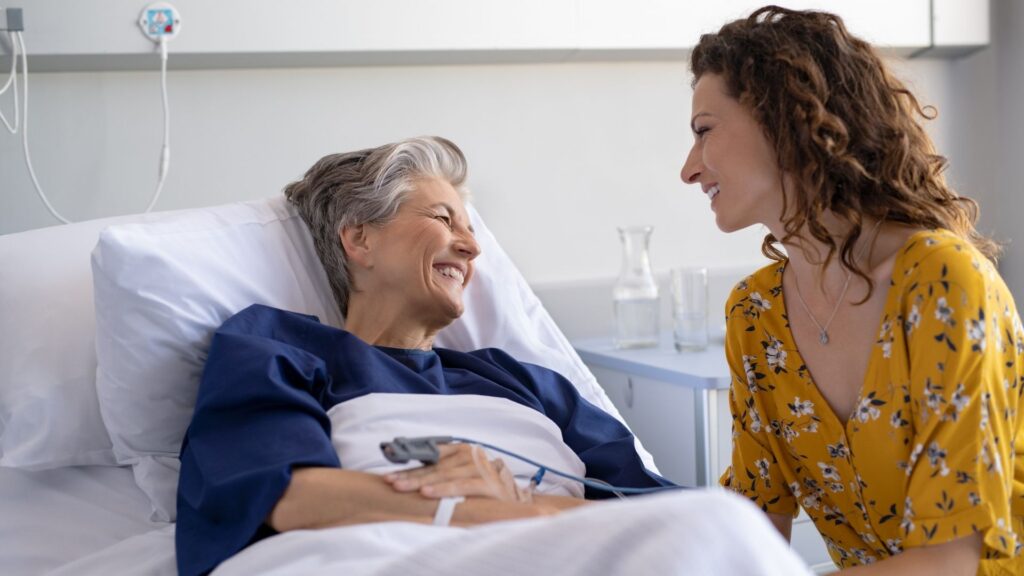
Supporting someone through VSED is one of the hardest things you’ll ever do. You’re honoring their choice while watching them die slowly. You’re providing comfort care while resisting every instinct to offer food or water. You’re being present to suffering you have the power to end, but choosing not to because this is what they want.
Let’s talk about what that actually looks like in the day to day.
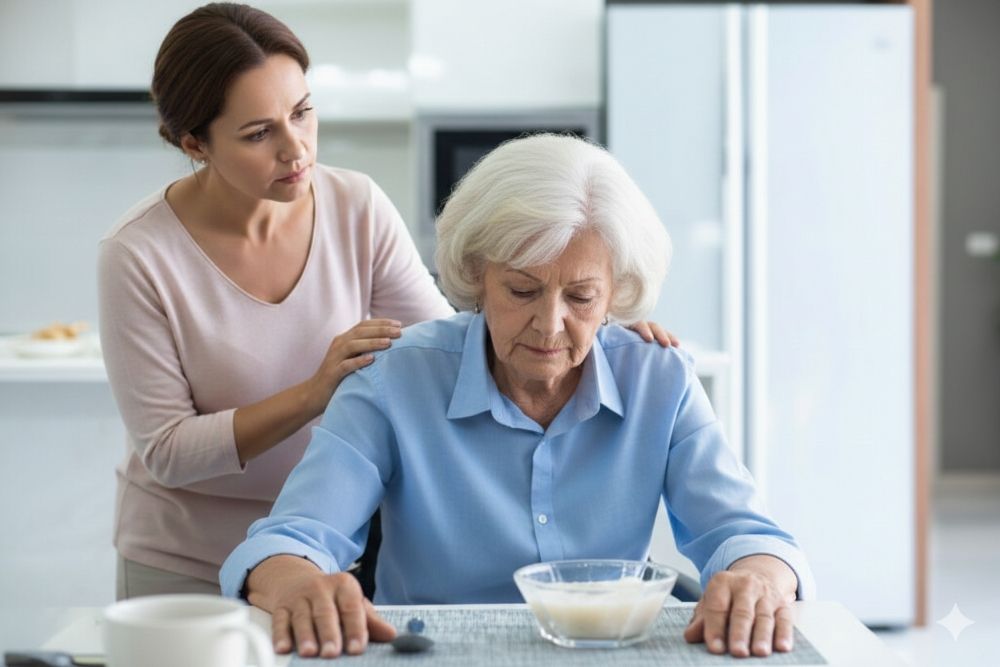
Mouth care becomes your primary task. Every two hours, you’ll swab their mouth with a moistened sponge. You’ll apply lip balm. You’ll keep their lips and tongue from cracking and bleeding. This isn’t just medical care, it’s intimacy. It’s a way of caring for them when you can’t feed them. It’s how you show love when every fiber of your being wants to get them a glass of water.
One daughter told us, “I hated it at first. Hated that mouth care was all I could do. But after a few days, I realized it was everything. Those moments when I was gently moistening Mom’s lips, when she’d open her eyes and give me a little smile, that was connection. That was me telling her I love you, I’m here, I’m not leaving. The mouth care became sacred.”
You’ll sit with uncertainty. There will be moments when you wonder if they want to stop. If they ask for water, do you give it to them? If they seem confused and don’t remember choosing VSED, what do you do?
This is why the preparation conversation matters so much. Before someone starts VSED, we help them think through these exact scenarios: What do you want your family to do if you ask for water three days in? What if you seem to forget that you chose this? What should guide us when you can’t tell us clearly what you want?
Most people who choose VSED are clear: “If I ask for water out of habit or confusion, remind me why I chose this. If I truly want to stop, if I say clearly that I’ve changed my mind, then honor that too. But don’t give me water just because I’m confused and asking for it.”
You’ll wrestle with your own emotions. Guilt for not stopping them. Resentment that they chose this and put you in this position. Relief when you think about it being over, followed by shame for feeling relieved. Profound love mixed with profound sadness.
All of these feelings are normal. All of them are okay. Supporting someone through VSED doesn’t mean you have to feel at peace with it. It means you’re honoring their autonomy even when it costs you something to do it.
We encourage families to find their own support, therapists, support groups, trusted friends who can hold space for the complicated feelings you’re navigating. Your loved one chose this path for themselves, but you didn’t choose to watch it. You deserve compassion and support too.
When Feelings Get Complicated
Let’s be honest about something: supporting someone through VSED can bring up feelings and situations that nobody prepares you for.
What if partway through, they want to stop? What if they take a sip of water? What if they change their mind completely?
First, know this: VSED can be stopped at any point. If someone decides they want to resume eating and drinking, that’s their choice too. It means the process starts over if they change their mind again later, but there’s no rule that says once you start you must finish. Some people do start VSED, realize it’s harder than they expected, and choose to stop. That’s not failure. That’s someone exercising the same autonomy that led them to start in the first place.
If someone does resume eating and drinking after several days, they’ll need medical supervision to avoid something called refeeding syndrome, complications that can happen when nutrition restarts after significant abstinence. But it can be done safely with the right support.
What if family members disagree? Maybe one sibling supports the person’s choice while another thinks it’s wrong and wants to intervene. Maybe a spouse understands intellectually but can’t bear it emotionally.
These disagreements are painful, but they’re not uncommon. What helps is remembering whose choice this is. It’s not a family vote. It’s not something that requires consensus. It’s the decision of the person whose life it is, whose suffering it is, whose right it is to decide when enough is enough.
Your role, as someone who loves them, is to respect their autonomy even when you don’t agree with their choice. You can be present without approving. You can hold their hand while privately wishing they’d chosen differently. Your love doesn’t require agreement, it requires showing up.
And here’s something else: you might feel differently at different moments. One day you’re at peace with their choice. The next day you’re angry. The day after that you’re just bone tired and want it to be over. All of that is okay. Feelings aren’t facts. They’re just feelings, and they’re allowed to be complicated.
What Happens If They Can’t Continue
Sometimes, despite the clearest intentions and the strongest resolve, someone starts VSED and realizes they can’t go through with it. Maybe the thirst is more than they can bear. Maybe they feel too conflicted. Maybe they just weren’t ready, even though they thought they were.
When this happens, there’s often a sense of failure, both for the person who stopped and for the family who supported them. But this isn’t failure. It’s information. It’s someone learning that this particular path isn’t right for them.
We’ve supported families through stopped VSED attempts. Sometimes the person tries again later and completes the process. Sometimes they explore other options, Medical Aid in Dying if they’re eligible, palliative sedation, or simply choosing to live differently than they had been. Sometimes they realize that having the option, having the control, was what they needed, and knowing they could choose VSED if they wanted to was enough to help them continue living.
There’s no shame in any of these outcomes. The goal isn’t a “successful” VSED. The goal is honoring someone’s autonomy, whatever choices that leads them to make.
Finding the Support You Need
If someone you love is considering or has chosen VSED, you need support. Not just information, though that matters. Not just medical oversight, though that’s important too. You need people who understand what you’re going through, who won’t judge, who can hold space for the complexity of what this is.
Support groups for families navigating VSED exist, though they can be hard to find. Online communities offer connection from people who’ve been through this. Grief counselors, particularly those experienced with anticipatory grief and complicated loss, can help you process feelings that have nowhere else to go.
And medical professionals who understand VSED, palliative care doctors, hospice nurses, end of life doulas, can provide the practical guidance that makes the process as peaceful as possible. They can manage symptoms, provide medications that ease discomfort, and be available 24/7 when you need someone who knows what they’re doing and can tell you if what’s happening is normal.
We walk alongside families through VSED with the same compassion we bring to every other end of life choice. We don’t judge. We don’t try to change anyone’s mind. We listen first, then we support. We make sure the person choosing VSED understands what they’re choosing. We help families prepare for what’s coming. We manage symptoms so the person is as comfortable as possible. And we’re there, on the phone at 2am when you’re scared, in your home when death is near, in the weeks and months after when grief hits in waves you didn’t expect.
Because this is hard. It’s one of the hardest things you’ll ever do. And you shouldn’t have to do it alone.
If You Need Us
If someone you love is considering VSED, or if you’re trying to support them through the process and need guidance, we’re here.
Book a complimentary Connection & Clarity Call to talk through what you’re facing. We’ll listen to your specific situation. We’ll answer your questions honestly. We’ll help you understand what to expect and how to provide the compassionate support your loved one needs.
This conversation is confidential, gentle, and without pressure. We’re here to support you, whatever you’re facing.
Book your Connection & Clarity Call
References
- Schwarz, J.: “Exploring the Option of Voluntarily Stopping Eating and Drinking” Journal of Palliative Medicine
- Pope, T.: “Voluntarily Stopping Eating and Drinking: A Legal Treatment Option at End of Life” Widener Law Review
- Ganzini, L. et al: “Nurses’ Experiences with Hospice Patients Who Refuse Food and Fluids” NEJM
- American Academy of Hospice and Palliative Medicine Position Statement on VSED